OVERVIEW
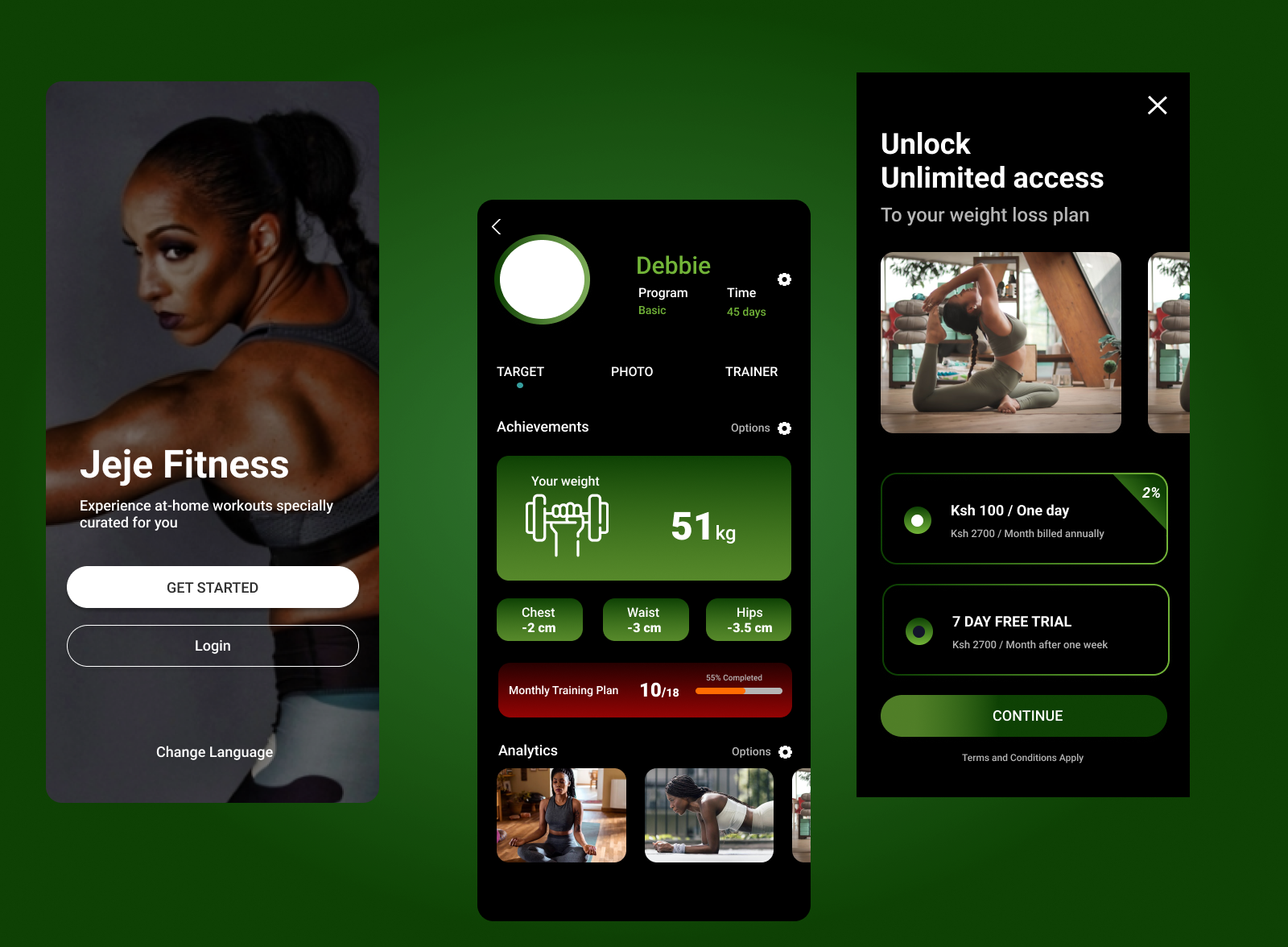
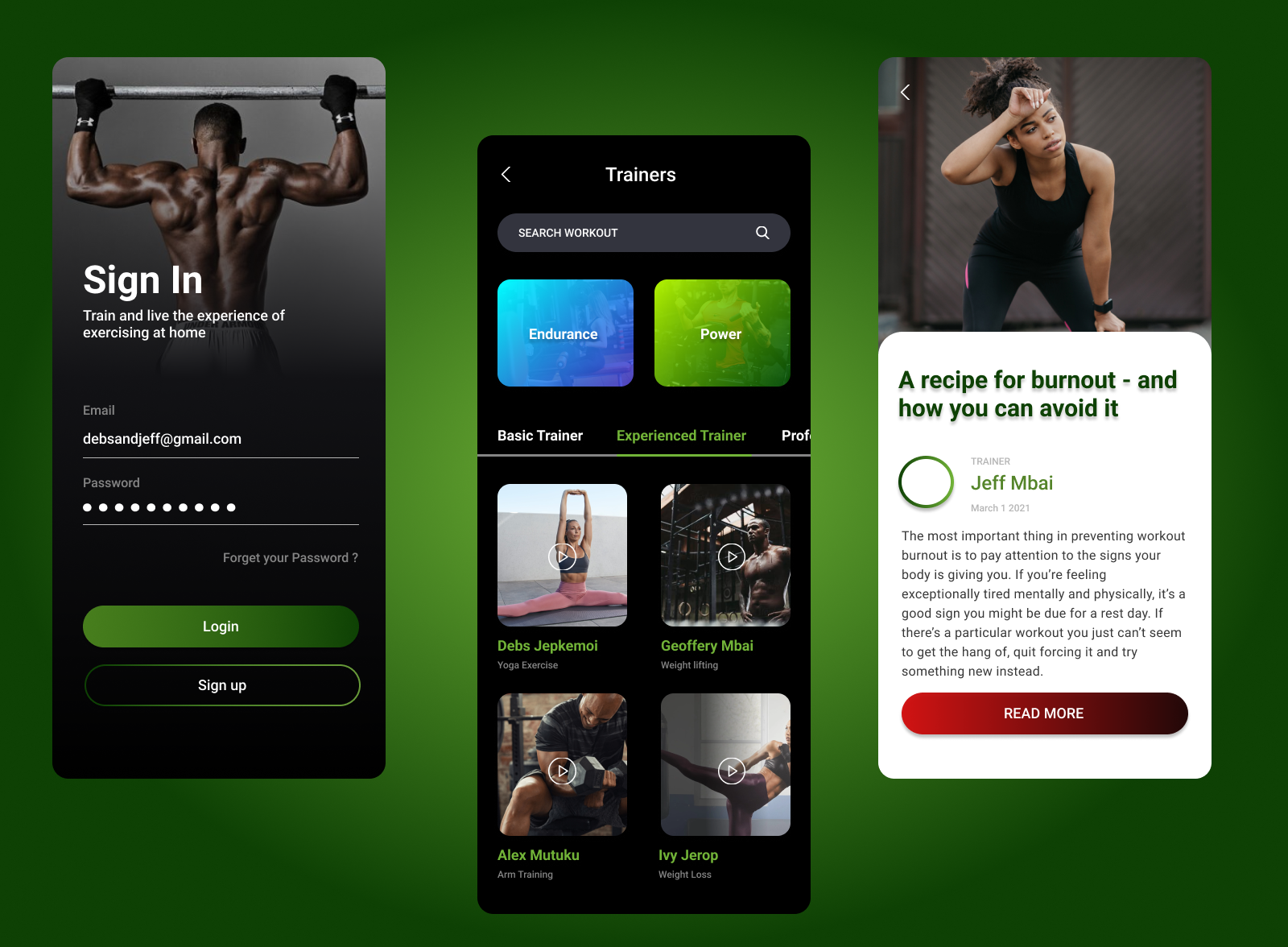
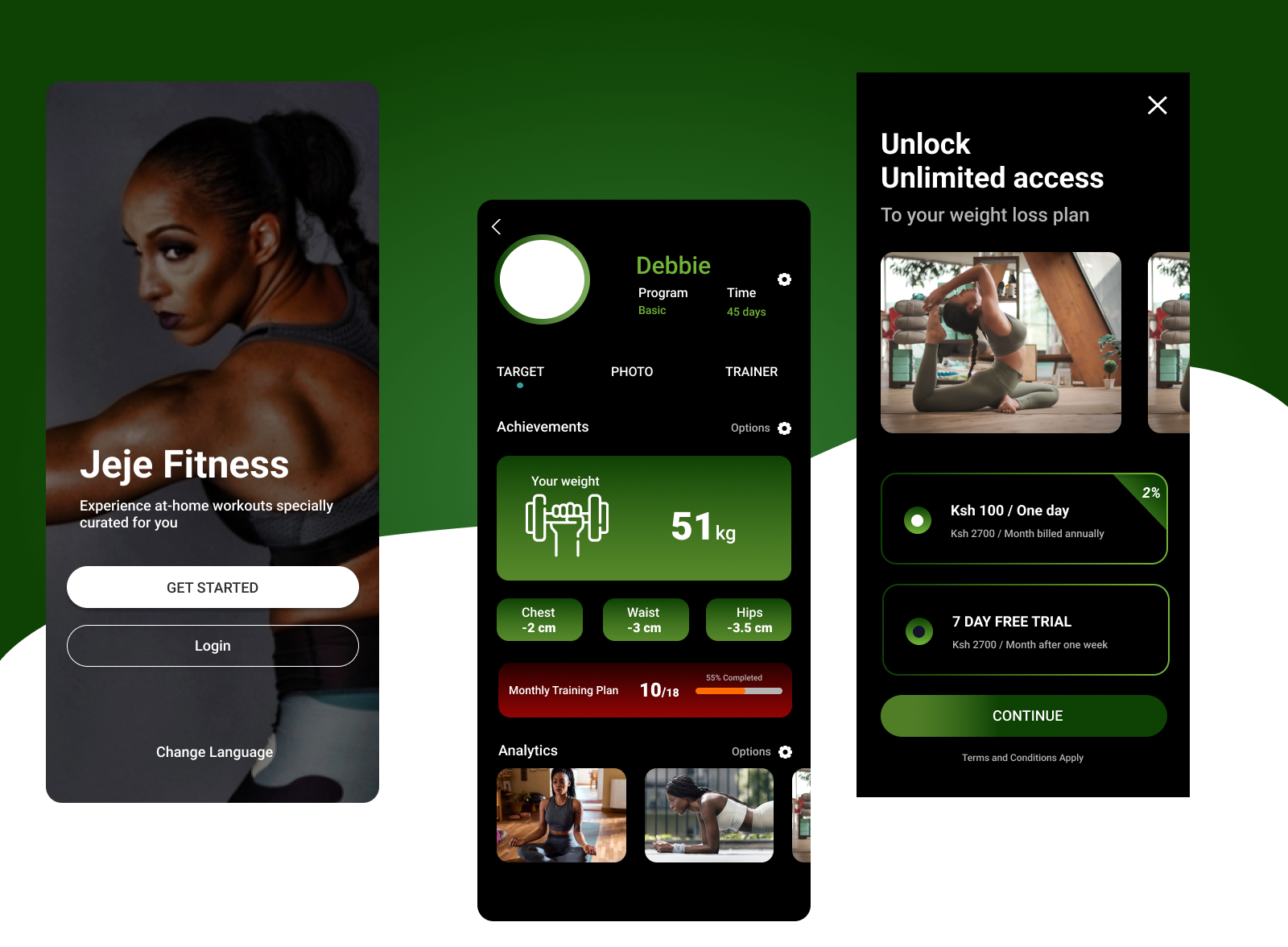
Jeje Fitness is an app we made as a submission for a class assignment. The fitness app is designed to empower individuals on their journey towards a healthier lifestyle. With a user-friendly interface and comprehensive features, the app serves as a one-stop solution for fitness enthusiasts of all levels.
PROBLEM STATEMENT
Many individuals struggle to adopt and maintain a healthy lifestyle due to several barriers and challenges. These obstacles often include a lack of access to personalized fitness guidance, difficulty in tracking progress, and insufficient motivation and support. As a result, people find it challenging to establish consistent workout routines, make informed dietary choices, and stay motivated on their fitness journey.
SOLUTION
A user-centric fitness app offering personalized workout programs, an extensive exercise library, progress tracking, nutrition guidance, a supportive community, and integration with wearable devices.
MY ROLE
UX research
Visual design
Interaction design
TOOLS
Figma
DESIGN PROCESS
1. Understanding the users
The app is designed for individuals of all fitness levels who are seeking to adopt and maintain a healthy lifestyle. This includes beginners looking to start their fitness journey, fitness enthusiasts striving to reach their goals, and individuals interested in improving their overall well-being.
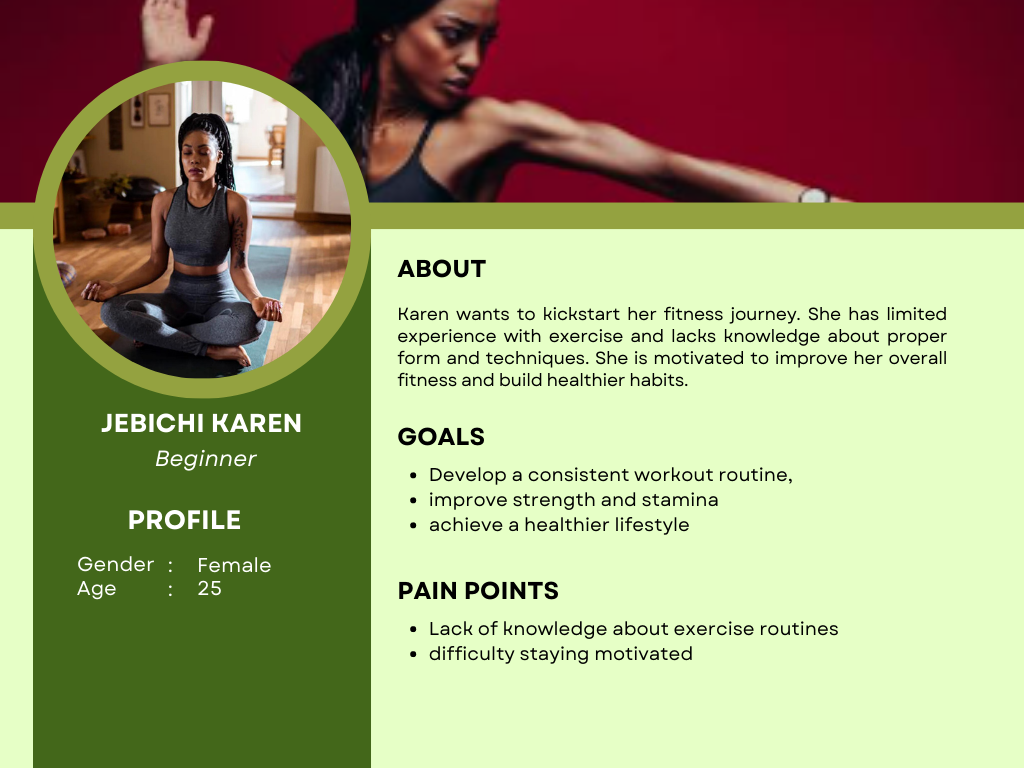
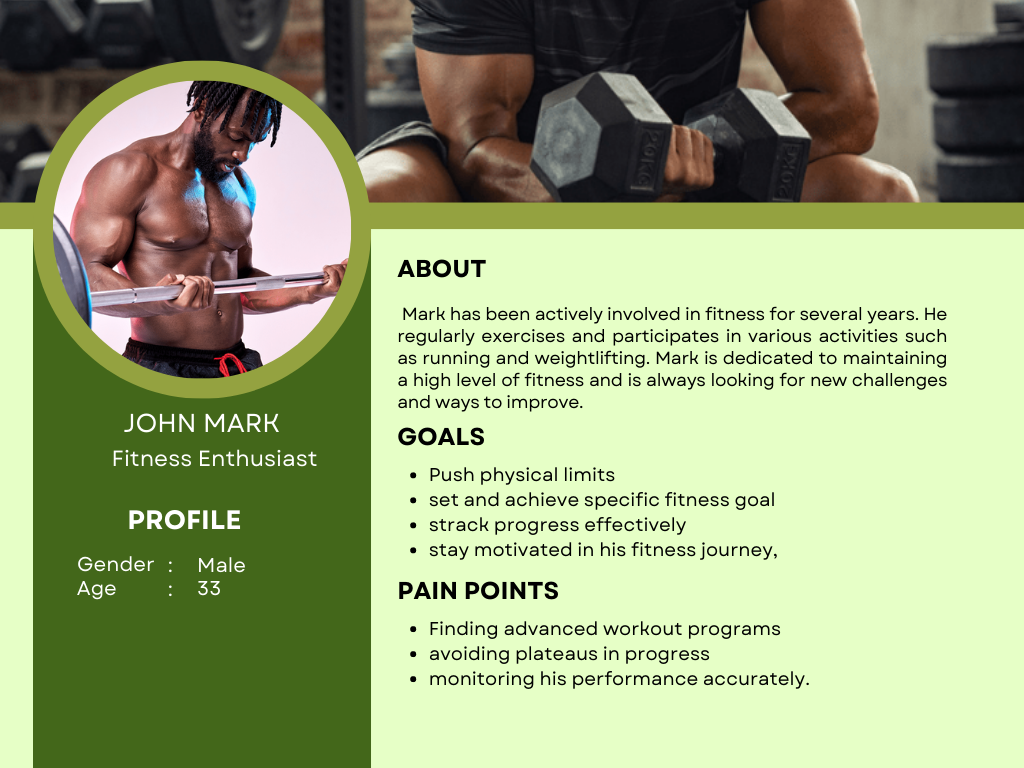
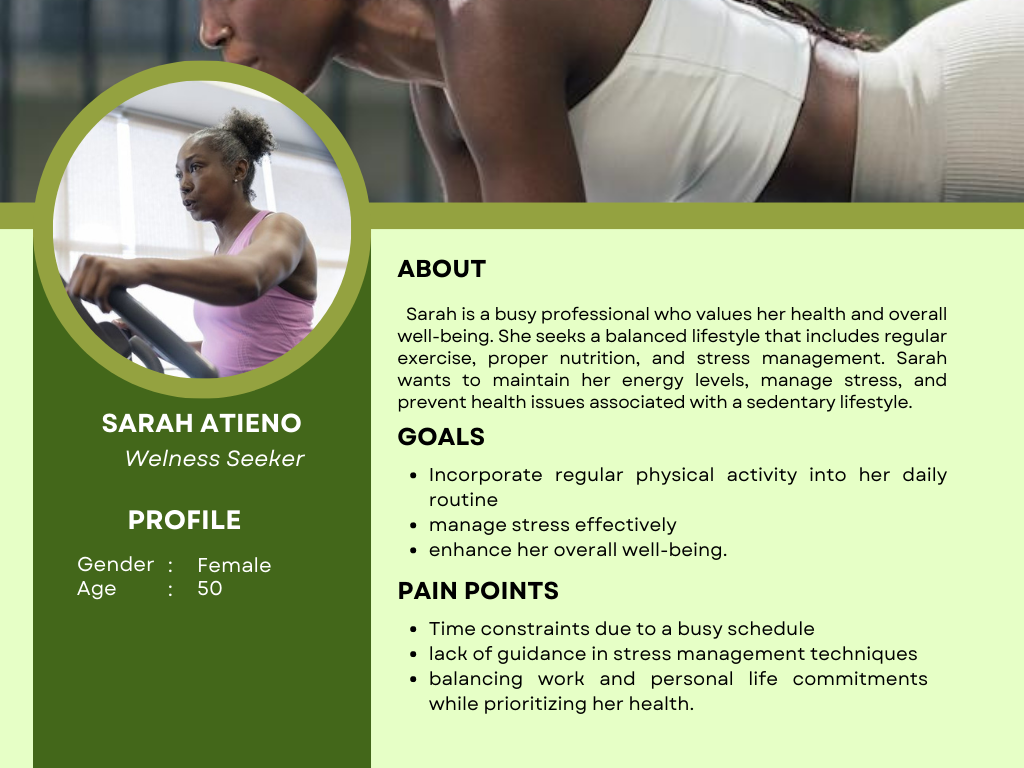
Personas
Based on desk research, we established the following 3 personas:
2. Goals and tasks
Karen's goals
Develop a consistent workout routine.
Improve strength and stamina.
Achieve a healthier lifestyle.
Karen's tasks
Complete a beginner's workout program provided by the app.
Follow instructional exercise videos to learn proper form and techniques.
Track progress and milestones in the app to stay motivated.
Explore educational resources in the app to learn about nutrition and healthy habits.
Mark' goals
Push physical limits and reach new fitness milestones.
Set and achieve specific fitness goals.
Track progress effectively.
Stay motivated and avoid plateaus.
Mark's tasks
Select advanced workout programs tailored to specific goals (e.g., strength training, endurance, or muscle building).
Utilize advanced tracking features to monitor performance metrics (e.g., weight lifted, personal records, and body measurements).
Participate in challenges or competitions to push boundaries and set new personal bests.
Access specialized workout routines for specific muscle groups or athletic skills.
Explore and follow expert trainers' guidance for advanced techniques and exercises.
Sarah's goals
Incorporate regular physical activity into daily routine.
Manage stress effectively.
Enhance overall well-being.
Sarah's tasks
Discover and follow guided workout routines designed for busy schedules.
Explore stress management techniques, such as guided meditation or mindfulness exercises, within the app.
Set reminders or schedule workouts to ensure consistency.
Engage in wellness challenges that focus on holistic well-being (e.g., sleep, hydration, and self-care).
3. DEFINE
Here, we focused on the app itself. We established the app's requirements.
Functional requirements
User Registration: Users should be able to create accounts and provide necessary information.
Personalized Workout Programs: The app should offer tailored workout programs based on user goals, fitness level, and preferences.
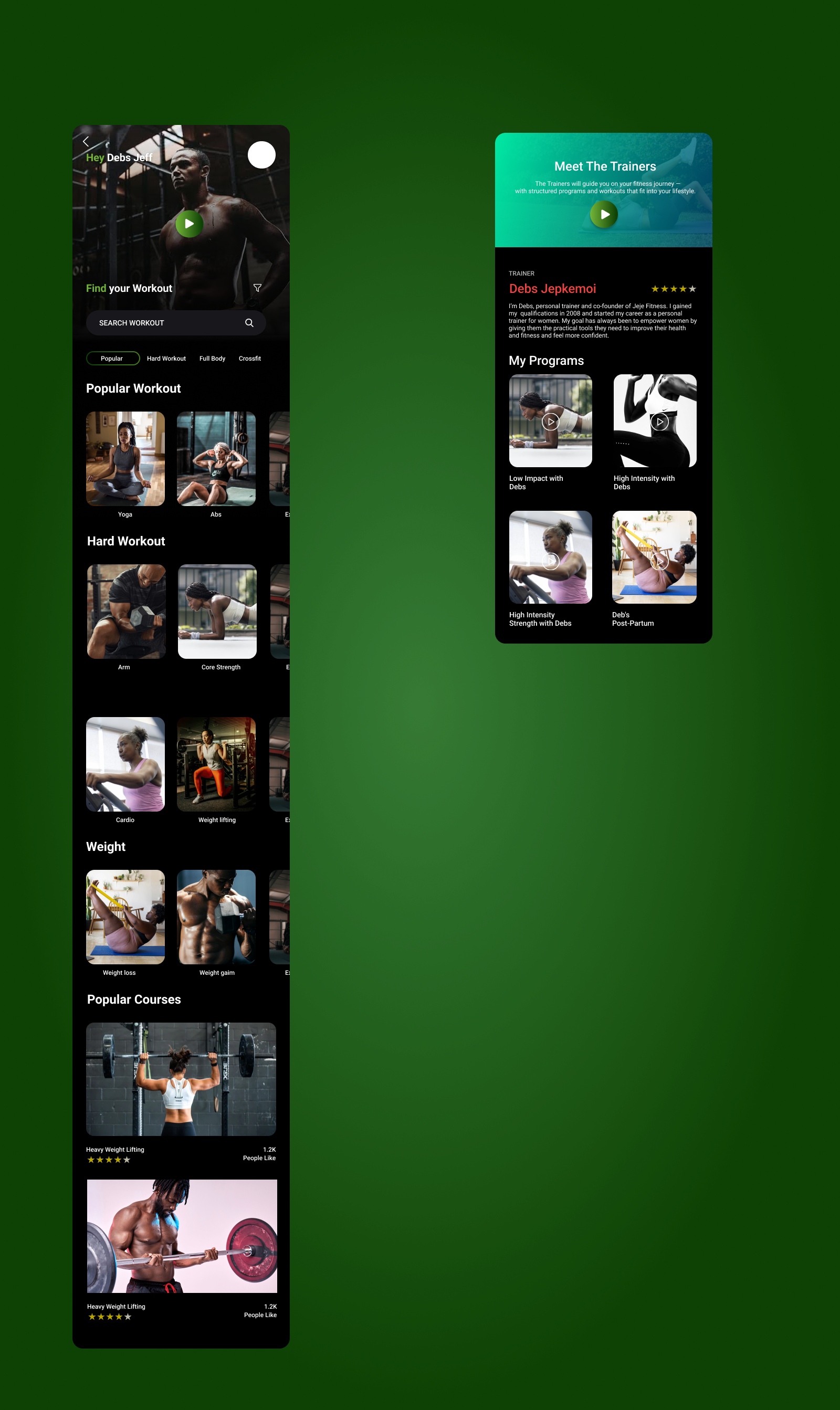
Exercise Library: A comprehensive library of exercises with instructional videos and descriptions should be available for users to choose from.
Progress Tracking: Users should be able to track their progress, including workout completion, personal records, and body measurements.
Integration with Wearable Devices: The app should integrate with popular wearable devices to sync and track fitness data seamlessly.
Goals: Users should be able to set goals, and receive rewards or achievements for their accomplishments.
Customization Options: Users should have the ability to customize their app experience, such as setting workout preferences and notifications.
Non functional requirements
Performance: The app should be fast, responsive, and able to handle a large user base without slowdowns or crashes.
Usability: The user interface should be intuitive, user-friendly, and accessible to users of varying technical abilities.
Security: Users' personal information, including login credentials and workout data, should be securely stored and protected.
Reliability: The app should be available and functional at all times, with minimal downtime for maintenance or updates.
Scalability: The app should have the capability to handle increased user demand and accommodate future growth.
Compatibility: The app should be compatible with various mobile devices, operating systems, and screen sizes.
Localization: The app should support multiple languages and regional settings to cater to a global user base.
Privacy: The app should comply with privacy regulations and provide users with control over their personal data.
PROTOTYPE